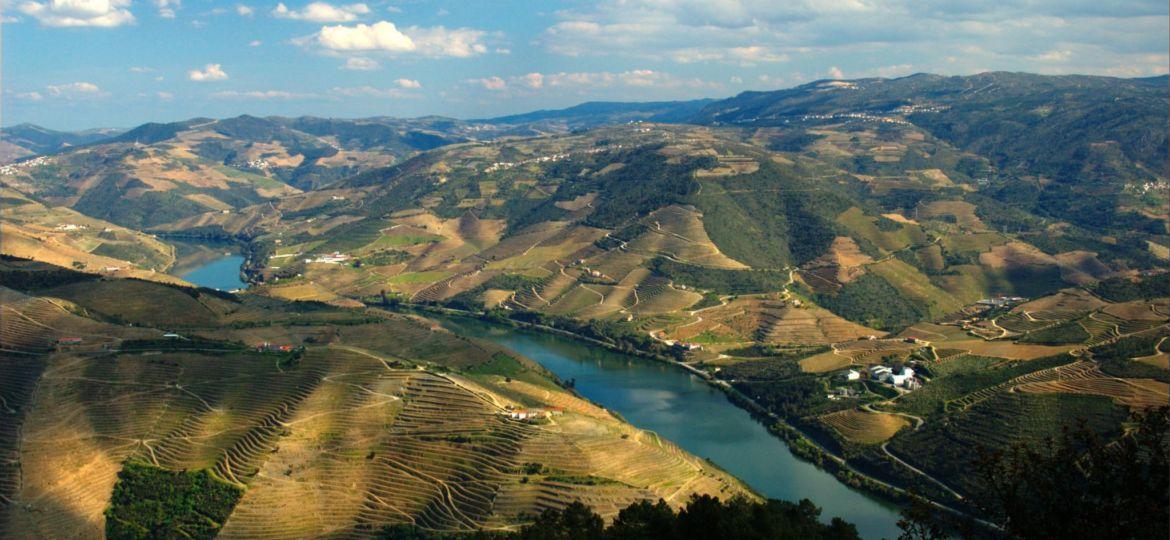
The oldest demarcated wine region in the world was considered a World Heritage Site in 2001 by Unesco.
The oldest Demarcated Wine Region in the world was considered a World Heritage Site in 2001 by Unesco. A region of rare beauty and indisputable historical importance.
For the Alto Douro Vinhateiro to be classified as a World Heritage Site, it had to meet certain criteria such as: being a region that has been producing wine for about 2000 years; having a landscape that, in addition to being a work of nature's art, is also the result of man's hard work.
The area distinguished as a World Heritage Site comprises thirteen municipalities that stretch along the Douro River and its tributaries, Varosa, Corgo, Távora, Torto and Pinhão.
In order to get to know them better, we have gathered some information about each one of them.
The village of Alijó is located 45 kilometers from Vila Real – the “capital” of the district.
It is characterized by being an essentially agricultural municipality, extending from the right bank of the Douro river to the limits of the neighboring municipality – Murça. Its landscape involves rivers, mountains and valleys.
There are still several traces of Roman roads and cave paintings scattered throughout the county.
Alijó has several leisure options, such as river tourism on the Douro River and ecotourism at the mouth of the Tua River.
Here you can find a privileged place for sport fishing and you will find a great wealth of viewpoints and landscapes, which enrich the general panorama of the World Heritage.
Armamar is located south of the Douro valley, on a steep slope.
Of the county's heritage, the main church stands out, dedicated to São Miguel – the patron saint of the parish, and is the only monument in the municipality classified as a national monument.
There are also the streets of Outeiro, which still have traces of the medieval period and the Misarela waterfall, a well-known viewpoint in Armamar.
One of the most recognized businesses in the region is agriculture, characterized essentially by the production of apples.
The municipality of Carrazeda de Ansiães marks the history of Nordeste Trás-os-Montes, being one of the most important fortresses on the right bank of the Douro River.
It contains a great landscape diversity and several testimonies of its historical past.
It is a typically rural municipality, with a wide variety of agricultural resources. Wine, olive oil and apples are the most profitable products.
One of its most recognized monuments is the Castle of Ansiães, classified in 1910 as a National Monument.
This medieval castle is surrounded by a wall that, in ancient times, defended the population area.
It is one of the oldest cities in Portugal and one of the most important urban centers in the Douro region.
The landscape is dominated by vineyards that produce the famous nectars known throughout the world.
Although the Nossa Senhora Sanctuary is one of the most recognized monuments in the city, there are several other places worth visiting.
The Cathedral of Lamego, the Castle and the Museum are some of the monuments that are also worth a visit.
The Church of S. Pedro de Balsemão is also a must stop, being classified as a National Monument.
Religious architecture has great weight in the city, not least because Lamego is one of the oldest dioceses in the country.
Lamego is a city where history, tradition and a strong cultural heritage can be found. And that completes the grandeur of the Douro – World Heritage.
The village of Mesão Frio is located on the right bank of the Douro River, and is about 40 kilometers from the “capital” of the district – Vila Real.
This small village appeared around the 3rd century, and is part of the oldest wine region in the world – the Douro Demarcated Region.
Known as the “Porta do Douro”, Mesão Frio is full of landscapes over the Douro River and also has a great historical richness.
The main instruments of the local economy are the vineyards and wine production.
One of the main monuments of the village is the Town Hall, former Franciscan Convent of Varatojo.
Another place to visit is the Miradouro de São Silvestre, which allows you to see the entire landscape that surrounds the village.
The city of Peso da Régua, better known simply as “Régua”, is considered the heart of the Douro.
It is located in Trás-os-Montes, and it was from Régua Quay that the typical Rabelo boats that transported the barrels of wine to Vila Nova de Gaia departed.
From its viewpoints it is possible to observe unforgettable panoramas of the city and the course of the Douro River. We recommend the São Leonardo and Santo António viewpoints.
From the river quay, many of the famous Cruises that cross the Douro River depart and arrive. From here it is possible to take a cruise on the Douro to Pinhão, Pocinho, Barca D’Alva or to Porto.
It is recommended that you visit the Douro Museum, which demonstrates the region's heritage through its exhibitions.
You can also try the delicious delicacies of the region in the various traditional restaurants around the city. Because World Heritage is also conquered by the palate…
Sabrosa is a village in northern Portugal located on the right bank of the Douro River, known for being the birthplace of the 15th century navigator, Fernão de Magalhães.
With several years of human occupation, the region is full of natural beauty, with several archaeological remains.
The soils in the Sabrosa region are very fertile, giving great economic power to the great lords of wine production.
In addition to the vineyard landscapes, it is also worth visiting the Igreja Matriz, a baroque-style church dating from the 18th century.
The village of Santa Marta de Penaguião is well known for its Adega Cooperativa, producer of several wines recognized in the region and characterized by the surrounding landscape of vineyards.
Santa Marta de Penaguião is surrounded by an unforgettable landscape, characterized by terraced vineyards and the river Corgo.
There are several Manor Houses in the region, due to the economic importance of the fertile soils and the creation of the Douro Demarcated Region.
The traditions of this village are closely linked to viticulture, and basketry and tapestry techniques are also used to make the typical lace and embroidery.
This beautiful village belongs to the district of Viseu, and is surrounded by the fertile valleys of the Douro River.
It is located on the left marker, and owes its name to a reservoir known as “pesqueira” where there were several species of fish, being a paradise for fishermen.
It is considered the oldest village in Portugal, dating back to 1055, and it is said that it was the home of the Marquis of Pombal when he was younger.
The landscape of the region is marked by extensive vineyards and has stunning landscapes, which can be admired from the Sanctuary of São Salvador do Mundo or Monte da Frágua – pieces of a puzzle that complete the Douro – World Heritage.
The village of Tabuaço is bathed by the river Távora, being a predominantly rural region.
In the region there are several traces of castros and other archaeological heritage.
Tabuaço is a region where agriculture predominates, however it is also very influenced by viniculture.
Places to visit are the Igreja Matriz and the village's Pelourinho.
In the Interactive Tourism Store, you can also see what is considered the “most complete watch in the world”, invented and built by Amândio José Ribeiro.
The village of Torre de Moncorvo is located in the south of Nordeste Trás-os-Montes, near the border with Spain.
The rivers Sabor and Douro are part of the county's landscape.
One of the most outstanding monuments is the Igreja Matriz, classified as National Heritage and considered as the largest religious temple in Trás-os-Montes.
Here there is one of the largest national deposits of iron, and mining has been an area of investment since 1874.
Currently, there is the Museum of Iron and the Moncorvo Region that demonstrates the evolution of the mining industry and local history and customs.
The county is part of the Almond Blossom circuit, which reaches its splendor in February and March.
It is located in the Alto Douro region and is characterized by its schist lands.
Its Paleolithic cave engravings are found outdoors in the Côa river valley, and led to the city being classified as a World Heritage Site by UNESCO.
It has one of the largest archaeological centers of rock art in Europe.
It is a mostly agricultural region. Known as the “Capital of the Almond Tree”, it has several of these trees in the municipality, allowing for stunning landscapes when the almond trees bloom.
In the streets of Vila Nova de Foz Côa you can find several archaeological remains, including castles, castros, churches, bridges, pillories, Roman roads, among many others.
Located near Serra do Marão and Alvão, Vila Real is a Trás-os-Montes city and one of the most important in the province of Trás-os-Montes.
Nature is of great importance in the landscape, and a visit to the Alvão Natural Park is recommended.
One of the best-known monuments in the city is the Palácio de Mateus, famous for its classically romantic gardens.
Vila Real is also known for its crafts and customs.
The Trás-os-Montes region is very famous for its gastronomy, and in the city of Vila Real you can find many typical traditional delicacies.

Born in the Douro, namely in the village of Galafura where the most beautiful viewpoint in the Douro is located, Monte de São Leonardo de Galafura. I am lucky to have been born in one of the most beautiful regions in the world and I want to share the best of what comes from it. I want to make known to the world its landscape, its customs, the gastronomy and the fantastic wines that go from strength to strength in the mouths of the world.
Venture with me in the best experiences that will awaken all your senses!
About Us
Douro Criativo is a travel agency and tour operator specialised in Douro tourism. We organise Douro river cruises, personalised tours and authentic experiences with a focus on excellence in service.
With an experienced team passionate about the region, we create Douro tourist programmes that combine breathtaking landscapes, visits to wine estates with tastings, traditional gastronomy and unforgettable river cruises.
We work with trusted local partners to ensure quality, authenticity and support for the regional community.
Discover the magic of the Douro with those who truly know the region →
Partner Network
We work with some of the finest operators, wine estates and institutions in the Douro region to guarantee authentic, high-quality experiences.










In compliance with Law No. 144/2015, for consumer dispute resolution please contact the arbitration commission of Turismo de Portugal: www.turismodeportugal.pt
Licensed Travel Agency by Turismo de Portugal: RNAVT 7667 RNAAT 787/2020